
Welcome to the GCC Black History Month cultural display "Rooted in History: Black Life in Artifacts". This exhibit, spread over several campus locations, is meant to share and inspire conversations about the beauty of Blackness and Black life. Each item is a personal effect of a GCC community member, donated with care for your pleasure.
As you view the items displayed here, take time to reflect on your own life. What items speak best to your experience? What would you choose for your own personal display?
GCC Black History Month Committee thanks you for your time and hopes you enjoy the experience.
Rooted in History Cultural Artifact Display Campus Locations

Display Locations include:
- Multicultural & Community Engagement Center on the 2nd Floor of Sierra Madre Bldg, Room 267
- Student Equity Office on the 2nd Floor of San Rafael Bldg
- Table near the stairs of the Library rotunda, 3rd Floor of Library Building
- Table by windows of the Learning Center on the 2nd Floor of Administration Bldg, Room 232
More Black Digital Collections To Explore

African American Perspectives: Materials Selected from the Rare Book Collection
"African American Perspectives" gives a panoramic and eclectic review of African American history and culture and is primarily comprised of two collections in the Rare Book and Special Collections Division: the African American Pamphlet Collection and the Daniel A.P. Murray Collection with a date range of 1822 through 1909. Most were written by African-American authors, though some were written by others on topics of particular importance in African-American history. Among the authors represented are Frederick Douglass, Ida B. Wells-Barnett, Benjamin W. Arnett, Alexander Crummel, Emanuel Love, Lydia Maria Child, Kelly Miller, Charles Sumner, Mary Church Terrell, and Booker T. Washington, among others.
The 800 + titles in the collection include sermons on racial pride and political activism; annual reports of charitable, educational, and political organizations; and college catalogs and graduation orations from the Hampton Institute, Morgan College, and Wilberforce University. Also included are biographies, slave narratives, speeches by members of Congress, legal documents, poetry, playbills, dramas, and librettos. Other materials focus on segregation, voting rights, violence against African Americans, the colonization of Africa by freed slaves, anti-slavery organizations and investigative reports. Several of the items are illustrated with portraits of the authors.

African-American Band Music & Recordings, 1883 to 1923
The core of this presentation consists of "stock" arrangements for bands or small orchestras of popular songs written by African Americans. In addition, we offer a smaller selection of historic sound recordings illustrating these songs and many others by the same composers (the arrangements might not necessarily be the same as those on the stocks). Educational materials include short biographies of composers and performers of the time and historical essays.
Disclaimer:
The Library of Congress presents these documents as part of the record of the past. These primary historical documents reflect the attitudes, perspectives, and beliefs of different times. Some of the music of this period, including that composed by African-Americans, features words, phrases, and "dialect" portrayals that can be considered offensive and demeaning. The Library of Congress does not endorse the views expressed in these collections, but is displaying this little-known facet of American history in order to draw attention to the struggles and triumphs of the great African-American musicians of a century ago.

Civil Rights History Oral Interview Project
On May 12, 2009, the U. S. Congress authorized a national initiative by passing The Civil Rights History Project Act of 2009 (Public Law 111-19).
The activists interviewed for this project belong to a wide range of occupations, including lawyers, judges, doctors, farmers, journalists, professors, and musicians, among others. The video recordings of their recollections cover a wide range of topics within the freedom struggle, such as the influence of the labor movement, nonviolence and self-defense, religious faith, music, and the experiences of young activists. Actions and events discussed in the interviews include the Freedom Rides (1961), the Albany Movement (1961), the March on Washington for Jobs and Freedom (1963), the Selma to Montgomery Rights March (1965), the Orangeburg Massacre (1968), the Poor People’s Campaign (1968), sit-ins, and voter registration drives in the South. The murder of fourteen year old Emmett Till in 1955, a horrific event that galvanized many young people into joining the freedom movement, looms large in the memories of many movement veterans.

Celebrating the Collections of Historically Black Colleges and Universities
Celebrating the Collections of Historically Black Colleges and Universities is a compilation of primary resources from HBCU libraries and archives. It includes thousands of digital objects that represent HBCU libraries first collaborative effort to make a historic collection digitally available. Collections are contributed from member libraries of the Historically Black College and University Library Alliance. For use and permission to publish, please contact the individual organization.
The collection includes photographs, university correspondence, manuscripts, images of campus buildings, alumni letters, memorabilia, and programs from campus events, representing HBCUs as cultural, social, and political institutions from the early 1800s until today.

Martin Luther King, Jr. Papers Project
As a result of Dr. Carson's selection, the King Papers Project became a cooperative venture of Stanford University, the King Center, and the King Estate. Its principal mission is to publish the definitive fourteen-volume edition of The Papers of Martin Luther King, Jr.,a comprehensive collection of King's most significant correspondence, sermons, speeches, published writings, and unpublished manuscripts. The seven already published volumes have become essential reference works for researchers and have influenced scholarship about King and the movements he inspired. Building upon this research foundation, the Project also engages in other related educational activities. Using internet communications technology to reach a diverse global audience, it has greatly increased popular as well as scholarly awareness of King's achievements and visionary ideas.

National Museum of African American History and Culture
Welcome to Smithsonian Open Access featuring the National Museum of African American History and Culture, where you can download, share, and reuse millions of the Smithsonian’s images—right now, without asking. With new platforms and tools, you have easier access to more than 5.1 million 2D and 3D digital items from our collections—with many more to come. This includes images and data from across the Smithsonian’s 21 museums, nine research centers, libraries, archives, and the National Zoo.

Digital Schomburg via the Schomburg Center for Research in Black Culture
Explore the latest digital-born projects from The Schomburg Center for Research in Black Culture.
Generously supported by The Helen Frankenthaler Foundation, this revival of DIGITAL SCHOMBURG provides increased access to our visual collections, in addition to our catalog of innovative legacy projects.
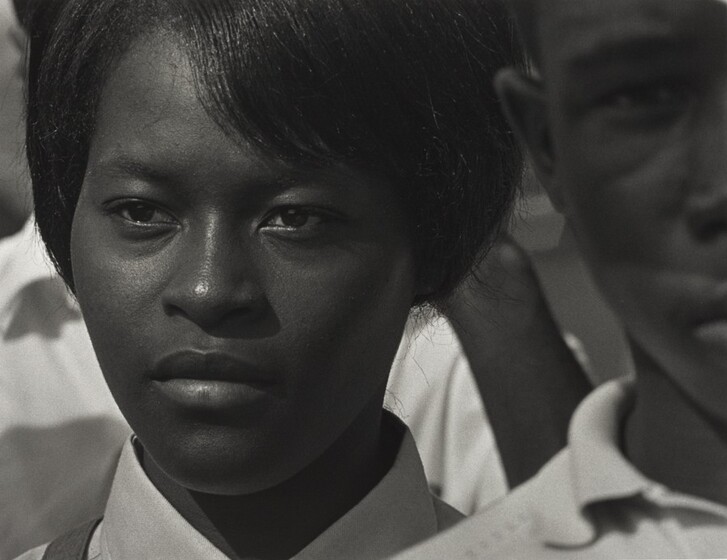
Black History Month: Celebrate Black Art & Artists
Witness the enduring mark Black artists have made on American art through more than two centuries of Black art in our collection — from 19th century painters Joshua Johnson and Robert Seldon Duncanson to modern and contemporary artists Faith Ringgold, Alma Thomas, Romare Bearden, Kara Walker, and more.
(page2).jpg)
Black Abolitionist Archive at University of Detroit Mercy
From the 1820s to the Civil War, African Americans assumed prominent roles in the transatlantic struggle to abolish slavery. In contrast to the popular belief that the abolitionist crusade was driven by wealthy whites, some 300 black abolitionists were regularly involved in the antislavery movement, heightening its credibility and broadening its agenda. The Black Abolitionist Digital Archive is a collection of over 800 speeches by antebellum blacks and approximately 1,000 editorials from the period. These important documents provide a portrait of black involvement in the anti-slavery movement; scans of these documents are provided as images and PDF files.
RADAR: Repository of AUC Atlanta University Center Robert W. Woodruff Library Digital collections, Archives, and Research
RADAR: Repository of AUC Digital collections, Archives, and Research, the library's institutional repository, is a service made available by the Digital Services Department of the Atlanta University Center Robert W. Woodruff Library. Digitized and born-digital archival collections, research, and scholarly output included here has been selected and deposited by the students and faculty of the member schools, Clark Atlanta University, the Interdenominational Theological Center, Morehouse College, and Spelman College, and the librarians of the AUC Woodruff Library.

The IAAM's Center for Family History's growing digital African American archive collection
The IAAM's Center for Family History's growing digital African American archive collection features primary source material by, from, and about the African American community spanning the colonial era of the Americas through the 20th Century. The digital resources below contain a variety of unique and previously unpublished artifacts such as African American military records, family photographs, and funeral programs. While the following list is not exhaustive, archival additions in the near future will include oral histories, slavery-era documents, as well as marriage, death, and birth records.

Umbra Search African American History
Umbra Search African American History makes African American history more broadly accessible through a freely available widget and search tool, umbrasearch.org; digitization of African American materials across University of Minnesota collections; and support of students, educators, artists, and the public through residencies, workshops, and events locally and around the country.
umbrasearch.org brings together hundreds of thousands digitized materials from over 1,000 libraries and archives across the country. 824,363 items from more than 1,000 U.S. archives, libraries, and museums.

Slave Voyages
The SlaveVoyages website is a collaborative digital initiative that compiles and makes publicly accessible records of the largest slave trades in history. Search these records to learn about the broad origins and forced relocations of more than 12 million African people who were sent across the Atlantic in slave ships, and hundreds of thousands more who were trafficked within the Americas. Explore where they were taken, the numerous rebellions that occurred, the horrific loss of life during the voyages, the identities and nationalities of the perpetrators, and much more.